Baroque
Cultural Research Center & Theater (Royal University of Fine Arts - North Campus, Street 70)
Prof. Dr. Gretel Schwoerer-Kohl
The Suite: Dance and instrumental court music in Europe and Asia during the 17th century.
& “Mannheim School“
Cultural Research Center & Theater (Royal University of Fine Arts - North Campus, Street 70)
Dr. Pen Dareth
Also called „Empfindsamkeit“ (sensitivity), an important movement occurring in German instrumental music at the courts during the early 18th century and characterized by an emphasis on the expression of a variety of deeply felt emotions within a musical work. This aesthetic is typical of a period that was much given to the expression of moving sentiments not only in art but also in everyday life.
Sunday 5
Dec 5:00 pm -
Cultural Research Center & Theater (Royal University of Fine Arts
- North Campus, Street 70)
Prof. Dieter Mack
The classical
style may be seen to culminate in the music of Mozart and Haydn.
As the link to the romantic era which dominated the nineteenth century,
Beethoven seems as a point of departure for many of the trends that existed
in this era. The so-called Romantic style includes the growth of a number
of varied and often antithetical influences.
The word ‘romantic‘ has to do with romance, imagination, the strange and the fantastic; in music it is applied (as to literature and painting) to works in which fantasy and imagination are in their own right more important than classical features such as balance, restraint and good taste.
Dodecaphonic
Music
(twelve
tone music)
Neo Classicism
Cultural Research Center & Theater (Royal University of Fine Arts - North Campus, Street 70)
Prof. Dieter Mack
According
to the Schönbergian principle, the 12 notes of the equal-tempered
scale are arranged in an articular order, forming a series or row that
serves as the basis of the composition.
The motivation for the neoclassicism was simple: the heavy musical experimentation
of the early part of the century left some composers wanting to „reconnect“
more again with musical tradition.
The difference is that the twelve-tone method did this by creating an
entirely new musical language, while neoclassicism did it by revisiting
tried-and-true musical heritage.
Contemporary Music
Cultural Research Center & Theater (Royal University of Fine Arts - North Campus, Street 70)
Prof. Dieter Mack
Impressionism
is the term for an art form in France around the turn of the century (19th/20th).
Visual artists coin the term, directing then to a music where the image
of a momentary impression became the basis for artistic considerations.
Debussy and Ravel are the most famous composers.
The music
of our time shows an incredible diversity.
There is no common language anymore, but only highly individual expressions.
You have free choice to visit all lectures for the duration of the Music Festival.
The entrance is free
Prof.
Dr. Gretel Schwoerer-Kohl
University Halle, Germany
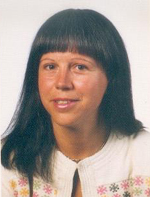
Gretel Schwörer-Kohl
was born in Karlsruhe/Germany. She studied piano and musicology at the
University of Music Freiburg.
In 1972, she moved to Cologne. At the university, she took art history
and anthropology as additional subjects.In 1974, she attended lectures
in philosophy and Thai language at the university Hamburg.
From 1974-76, she took lessons on Thai music at Silapakhorn University
in Bangkok. During her two-year stint in Thailand, she also went out for
field work to collect musical instruments and to record music among the
hill tribes in northern Thailand. In 1980, she finished her dissertation
on “The Mouth Organ of the Lahu people in Northern Thailand.“
Since 1993, she has been studying the music of Myanmar and in 1998, she
submitted her habilitation on “The ceremonial Music for the 37 nat-spirits
in Myanmar, Burma.“
Her special interest is devoted to the music of Southeast Asia mainly
in its ritual context and to the different types of mouth organs in East-
and Southeast Asia. Since 1999, she is professor for ethnomusicology at
the department of musicology of the Martin-Luther-University in Halle.
Royal Academy of Cambodia
He obtained a scholarship grant to study at the Franz Liszt Conservatory of Music in Weimar/Germany. After his Concert Diploma in violin, he moved to the Music Academy Utrecht/Netherlands and he graduated with a Phd. in musicology. Dr. Pen Dareth is now a member of the Royal Government and advisor to the Council of Ministers.
Prof.
Dieter Mack
University of Music Lübeck, Germany
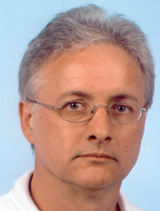
Mack Dieter
was born in 1954 in Speyer, Germany. He studied composition with Klaus
Huber and Brian Ferneyhough, music theory and piano with Rosa Sabater
at the University of Music Freiburg from 1975-80.
From 1977-81, he was an assistant at the Experimental Studio of the Heinrich
Strobel Foundation of SWF and obtained their scholarship grant from the
foundation in 1980-81. Since 1980, he has been a member of ExVoCo (EXpanded
VOice COmpany) in Stuttgart and in 1991, he served as a composer-in-residence
at the School of Music in Wellington (New Zealand).
Since 1978, he has had various studies in Bali, southern India and Japan,
especially one year in Bali (1981-82). In 1982, he founded a Balinese
gamelan ensemble in Freiburg and in 1988, he toured Southeast Asia (Goethe-Institute).
In 1997-98, he was a co-leader of the CATUR YUGA Project (cultural exchange
between Bali, Basel and Freiburg).
Since 1980, he has lectured on Balinese music, improvisation and music
theory. Since 1986, he has been a professor at the University of Music
Freiburg and since 1989, he gave lectures on composition and music education
in Indonesia. Since 2003, he has been a professor for composition at the
University of Music Lübeck.
With the support from the German Academic Exchange Service (DAAD), he
was a long-term guest lecturer at IKIP (now UPI) in Bandung from 1992-95
and is also a consultant in a research project there, sponsored by the
Ford Foundation since 1997. Since 1999, he is guest professor in postgraduate
composition at the art academy STSI Surakarta, Central Java.